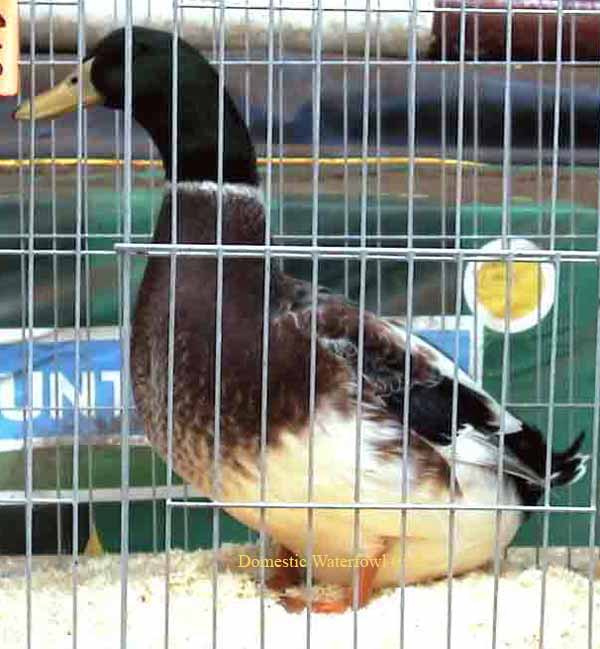
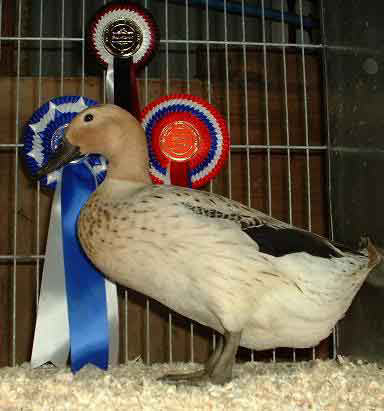
Abacot Ranger
Breed History; . . . Abacot
Rangers were further developedbetween 1917 and 1923 by Oscar Gray
and often referred to as the Hooded Ranger in America but were
initially a British breed that fell out of fashion ( the females
have a 'hood' of fawn-buff feathers ) . First
mentioned in Europe in the the years following the war of
1914-1918. Known as Streicher in Germany and much of Europe and
very popular in Eastern Europe as a dual purpose duck) They are
one of the few breeds where the breed standards are virtually
unaltered today. A reasonable layer and sitter with a differing
bill colour in males and females similar to the Appleyards etc.
making sexing after 8 weeks simple. They are a long lived placid
breed unknown by many and getting rarer
Names. . . Streicher in Germany and Eastern Europe. Hooded Ranger . . old Uk and US name : Le Canard Streicher ' in France/Belgium in some old Books Abcot
Names. . . Streicher in Germany and Eastern Europe. Hooded Ranger . . old Uk and US name : Le Canard Streicher ' in France/Belgium in some old Books Abcot
Country Of Origin; ..Great
Britain. An early 20th Century Breed mentioned from the 1920's
onwards
Carriage;. . . Similar to the
Campbell ducks but a substantialy more well built duck ie useful
for the table if needed ie chunky and slow(ish). Long lived I have
13 year olds still laying can get waterlogged in winter after 10
years old so watch out.
Purpose;...
.......Eggs..Meat...Broody... a good utility duck
Eggs.....................The eggs weigh
65 g and are white but do increase in size with age as per all
ducks, many of my 10+ girls laid double yolkers useless to hatch
but nice baked
Egg Numbers .............180 /200
Breed Defects. . . . .
.Drake .. Too dark a body colour; breast red running around from
chest to stomach area, lack of lacing within feathers; brown head,
incomplete or missing neck ring, defective wing bars, bright
yellow bill, keel .
.. . . . . . . . . . . . . . . Duck; Eye Stripes; Coarse colour graining ie more resembling an Appleyard; white head (no 'hood'); grey wing bars; defective wing bars ; bright blue bill; Keel through crossing for size with an Appleyard
.. . . . . . . . . . . . . . . Duck; Eye Stripes; Coarse colour graining ie more resembling an Appleyard; white head (no 'hood'); grey wing bars; defective wing bars ; bright blue bill; Keel through crossing for size with an Appleyard
Breed Hint.... Kept as trio
or pair .. will go broody and hatch. Long lived 10 years + is well
known. Keen to lay in winter / very early spring so watch
for early broodiness
Weights. . . .5 to 6 pounds. This is an
average size bird (weight of the duck: 2,5 kg; of the drake: 3
kg).
Breed Tip ****Easily confused as a
duckling with mini Appleyards and Harlequins... easiest difference
... they are the greediest / largest / chubbiest until full
feathering shows the difference in colour of the wing bars etc
Flying . . .
like a brick. . .rarely flies a good back garden all
rounder;
Genetic profile :Harlequin
phase/symbollih /Recessive. Recessive and allelic
to both the dark phase and the light phase. The effects on plumage
color are similar to the light phase but more exaggerated. On the
Abacot the colouring is without the without brown dilution
of the Welsh Harlequin . Note the sex linked bill colouring